Louisiana DOTD is committed to providing a fully accessible website experience for all users of all abilities, including those who rely on assistive technologies like screen readers, screen enlargement software, and alternative keyboard input devices to navigate the web.
Ongoing Efforts to Ensure Accessibility
We follow the Web Content Accessibility Guidelines (WCAG) version 2.1 as our guiding principle for determining accessibility. These are internationally agreed-upon standards that cover a wide range of recommendations and best practices for making content useable. As we add new pages and functionality to our website, designs, code, and content entry practices are checked against these standards.
Website accessibility is an ongoing process. We continually test content and features for WCAG 2.1 Level AA compliance and remediate any issues to ensure we meet or exceed the standards. Testing of our website is performed by our team members using industry-standard tools such as the Accessibility Checker WordPress Plugin, color contrast analyzers, keyboard-only navigation techniques, and Flesch-Kincaid readability tests.
Accessibility Features On Our Website
The following is a list of items we have included in our website to improve its accessibility:
- Alternative text for all images
- Proper hierarchy of page content, flowing logically from heading to subheadings.
- Appropriate color contrast between text and backgrounds
- ARIA conformance of content for screen readers
Rich Content
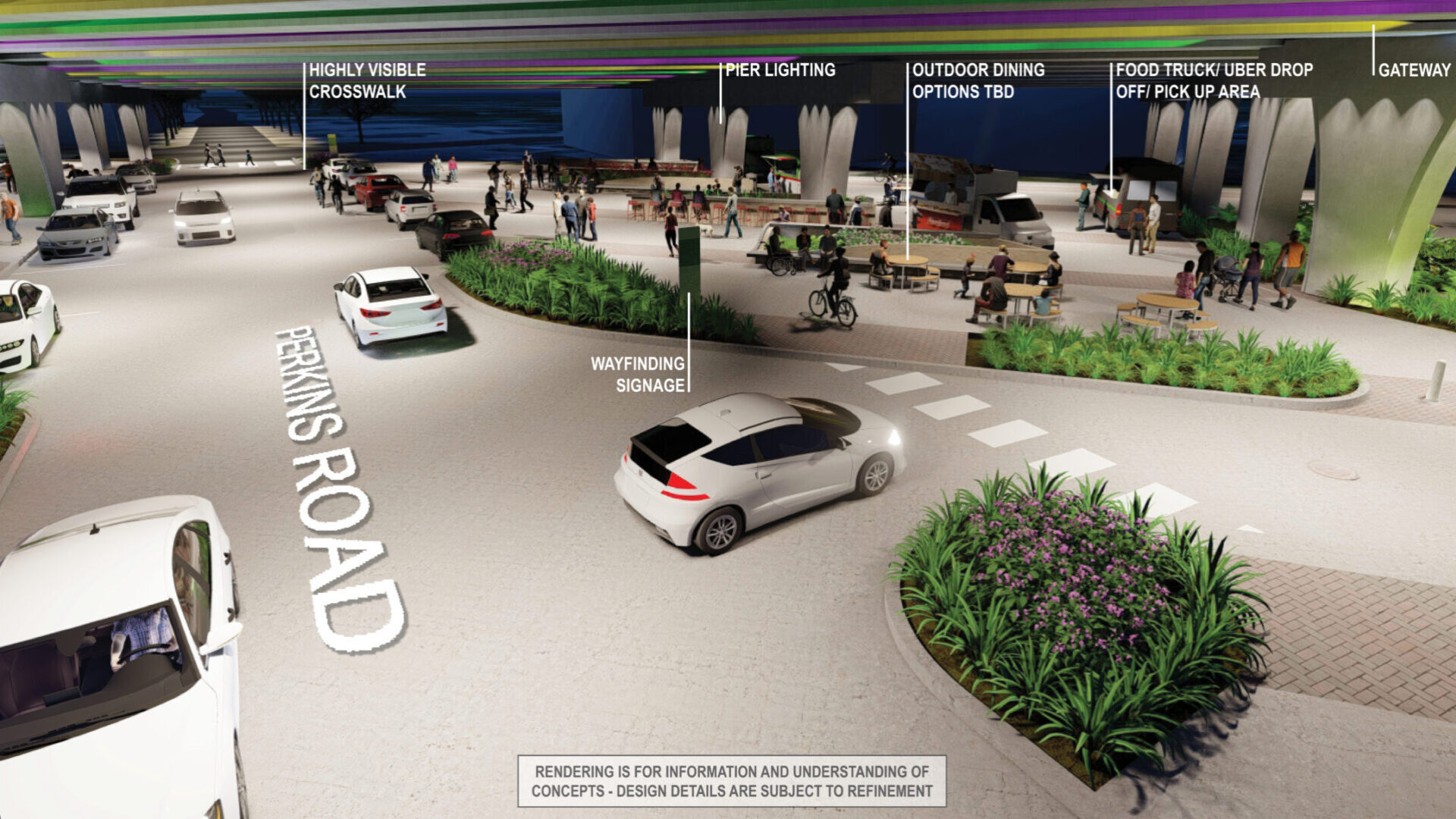
As a public transportation improvement website, our intention is to deliver useful information in a creative manner to our audience. Much of this information takes the form of maps, illustrations, photos or similar “rich content” exhibits. Implementation of “before and after” style sliders are a very effective means of comparing the current condition with proposed improvements. Similarly, maps covering multiple miles in length or illustrative plans covering several city blocks are offered using “pan and zoom” interfaces. This allows our audience to view high resolution details and glean far more information from these exhibits than if they were reduced to fit a screen.
Yet we recognize that vision impaired persons may have challenges utilizing this information. One mitigation technique we have employed is to provide a detailed narrative accompanying these interactive exhibits. If you require further assistance, LADOTD and the project team are available to describe and clarify the content presented within this website. Please contact us and request assistance.
Where We’re Improving
In our efforts to bring our website up to standard, we are targeting the following areas:
- Include alternative “alt” text as new image content is added.
- Ensure new content conforms to color contrast rules
- Identification of pertinent project content within the document archive and provision in WCAG compliant ways.
- Text captioning will be added to any new video content
This is part of our broader effort to make everyone’s experience accessing this website a welcoming and enjoyable one. Please note that while we make every effort to provide information accessible for all users, we cannot guarantee the accessibility of third-party websites to which we may link.
Accessibility Support Contact
We welcome comments, questions, and feedback on our website. If you are using assistive technologies and are having difficulty using our website, please email info@i10br.com or give us a call at (225) 768-9060 and ask for the person leading public engagement for the I-10 Widening project. We will do our best to assist you and resolve issues.